

Hungry for Love
A toxic ancestral script turned siblings into rivals. My generation broke free.

When I was 18 and adrift in Toronto, dinner time used to sink my heart. I ate at my desk in a bedsit that smelled of cooking oil and chicken livers. One evening I went home with a stranger who offered to fry me a T-bone, but it tasted of loneliness, just like the livers and his mouth.
On lucky nights I would take the subway to Aunt Celia’s house on Forest Ridge Drive, a world away from the goulash joints and head shops around the campus. Celia, my mother’s older sister, wore the trim capris and silky shirt of a catalog model. Her chandelier sparkled, her pale carpet looked freshly vacuumed. I didn’t see a single book. But I had come for her cooking, not her thoughts on Margaret Atwood, and the headiest aromas wafted from her kitchen. The sun, the earth, the care of hands that took no shortcuts.
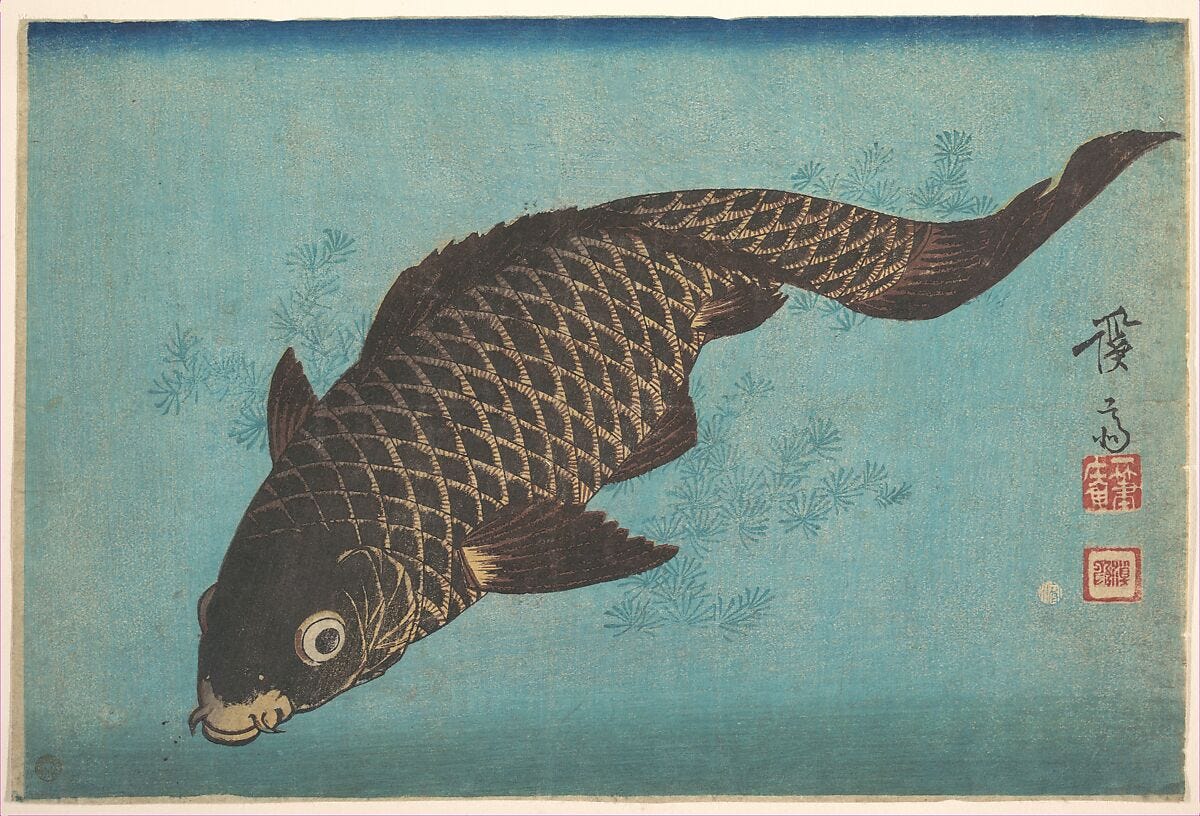
She did it all for me, her only guest, and Uncle Michael. I vaguely remember coq au vin, plump and glossy. Cooking school had led her down the thyme-scented lanes of France. But her most thrilling dish harked back to the shtetl—a baked carp in which sweet and sour duked it out, and I was the grateful winner.
Celia twinkled as I cleaned my plate. “More carp, Rona?”
She wanted to make me happy. She didn’t have to say it.

Long-distance phone calls used to set my mother on edge. She could hear the dollars adding up. When I exclaimed at Celia’s baked carp, she sounded testy. Carp, she said, was a junk fish, a bottom feeder. My grandmother, the queen of Jewish cooking, had never stooped to it. But how nice that Celia had been kind to me. “Your company will do her good. She’s so lonely and bored.” My mother’s tone—disdain veiled in pity—made me flinch.
Seasoned anglers tip their caps to the fish my mother scorned. Outdoor Life puts it this way: “His mug is as homely as a bulldog’s, his form is about as pretty as a sledge hammer…. But if you want a battling fool in scales, a fish that never quits and doesn’t believe he’s licked even when you sink a gaff in him, I give you the hog of the weed beds, the roughneck of the river….”
The women in my mother’s line had to fight for every scrap of respect. Where they came from, being Jewish could get you raped or killed. You had to win the contest known as life.
My mother and her sister were born into one of those families that affix children early with labels. Celia, “the pretty one,” followed the path marked for her. She danced and partied her way through adolescence, then chose a Jewish husband and set about raising two daughters. She had played the piano as a child and spoke reverently of Emil Gilels. But to her sister, “the clever one,” Celia was a dabbler, a pretender in the realm of art.
The way my mother always told it, brains left beauty in the dust. She, not Celia, was their shtetl-born parents’ shining hope—published poet at seven, winner of every academic prize on offer from high school through her doctoral program at Radcliffe. Yet she burned at the memory of her sister’s long legs and effortless way with boys.
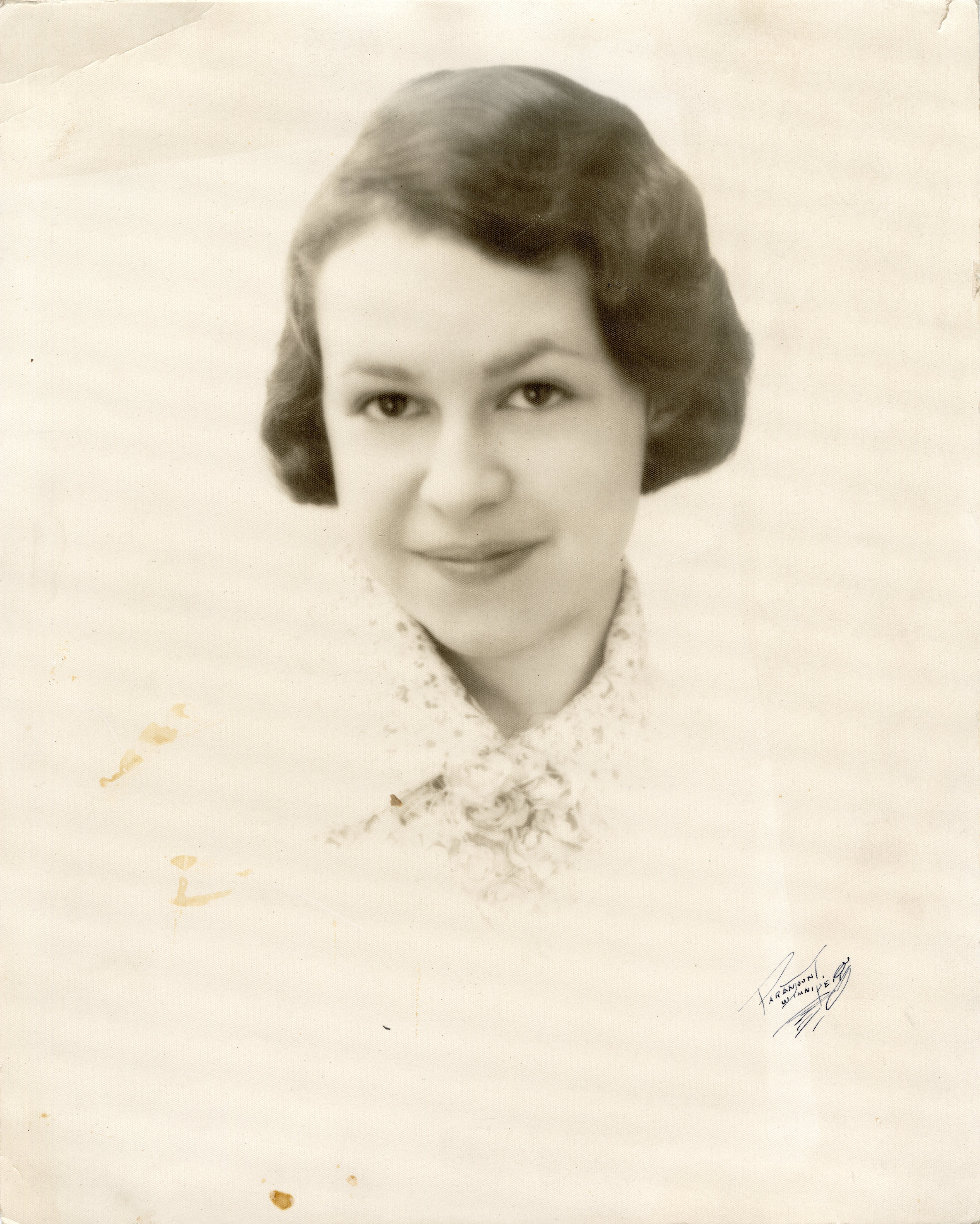
A photo of my mother as a girl shows eyes alight with hope and lips that she’d have called, if they were anyone else’s, “a perfect Cupid’s bow.” I want to tell this girl, as I have told random strangers because no female person can hear it too often, “Do you know how beautiful you are?”
She never knew. Beauty belonged to Celia, the one jewel she possessed. In her own mind, my mother was incorrigibly overweight. She hid her curves behind button-front dresses cut like tubes. The first time Celia greeted me with her blouse tucked in, I saw her through my mother’s jealous eyes—a sylph at 50, wielding her unearned power.
My mother had been dead for at least 20 years when a friend of hers remarked while pouring tea, “It must have been so hard for you, knowing your sister was the favorite.”
I bridled. “You’re mistaken. My mother loved us both in different ways.” I was neither wrong nor entirely right. Growing up, I chafed at Joyce’s silky hair and melted-chocolate eyes. Had she been crafted by elves to bewitch our parents? It looked that way to me, a merely pleasant-looking child. Hungry for proof that I was loved, I erupted if Joyce’s chocolate chip cookie looked bigger than mine by a crumb.
Like my mother, I am one of two sisters born four years apart, as if my grandmother encoded the instructions. Our parents lost no time affixing labels. Thoughtful, dependable, relentlessly honest: Rona. Impulsive, determined, all energy and fire: Joyce. Throw our best qualities into a pot, give it a stir and simmer up a woman anyone would be glad to know—or become. We have laughed about this imaginary woman, and laughter sees us through when we enrage or disappoint each other.
Once we didn’t speak for more than a year, yet I can’t recall a time when I didn’t love or respect my sister. I know she’d say the same of me. Even so, the very thought of being the less cherished daughter unlocks a primal anguish.
For Celia it wasn’t just a thought.
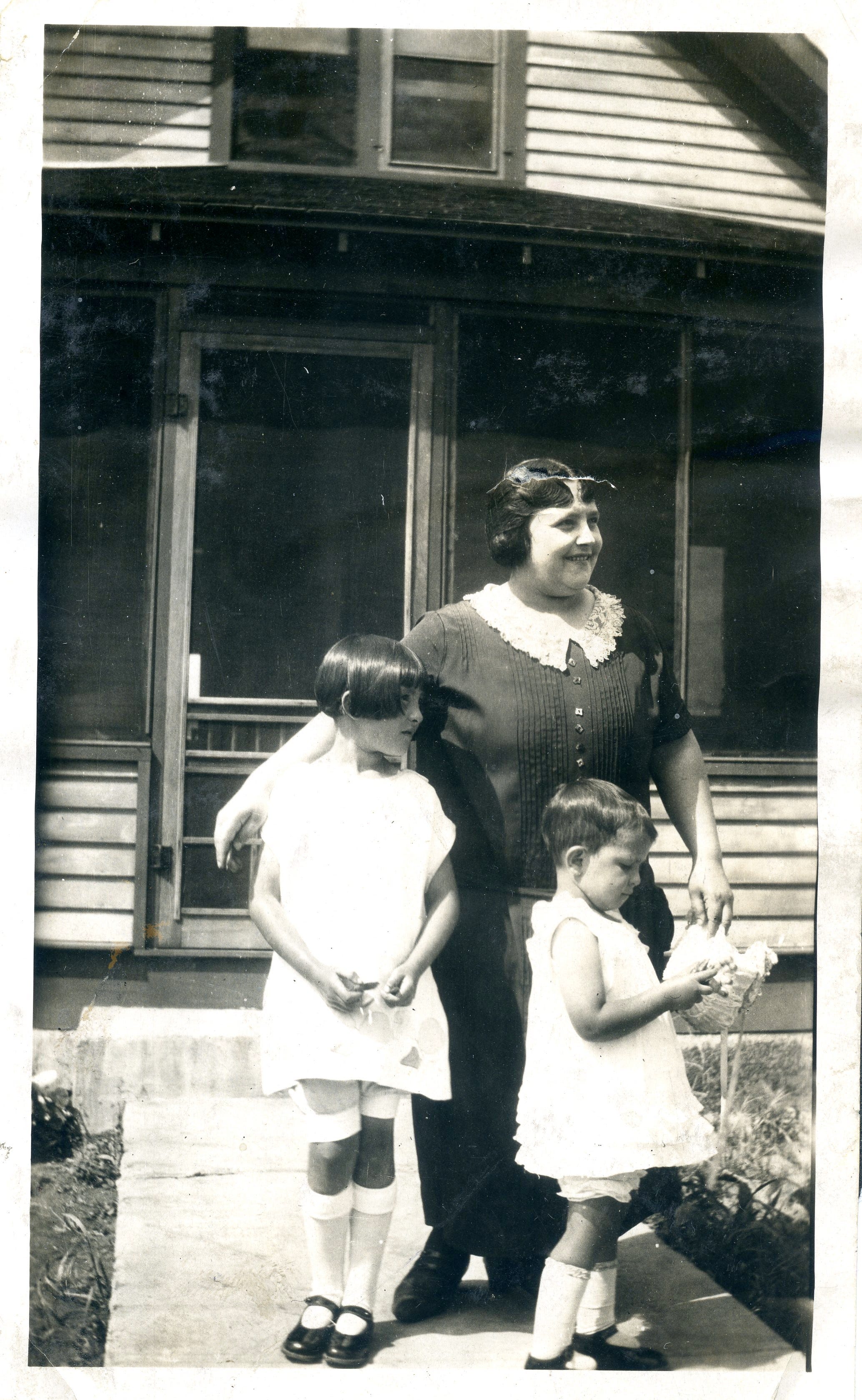
My grandmother doled out love like chocolates from a gift box. Her second-born, my mother, got the truffle with the caramel core, Celia whatever remained. A sickly baby, she tried her mother’s patience from the start, but her tenuous position had deep roots.
My grandmother, the first Rona, was herself a rejected daughter. Her own mother, who had five children, coddled her sons and treated daughters like servants. Rona, the lowest of the low, she called “Ugliness.” When a Cossack had his way with nine-year-old Rona, she came home to a beating from her mother. Who would marry her now?
Rona never spoke a word against her mother. But as she lay dying of pancreatic cancer, my mother ran a tape recorder. She had nearly run out of tape when my grandmother wailed in the voice of an abandoned child, “Why does my mother hate me? Why does she think I’m ugly? How can a mother be so mean?”
A friend of mine, abused by a violent mother, flowered with her children and grandchildren. By cultivating tenderness in stony soil, she reaped a miracle. My grandmother kept every stone. She dressed both her girls in pleats and lace she had sewn herself, an artist with her needle. But someone had to carry that heavy cairn of unloving. She chose Celia, who entered the world as her witch of a mother was leaving it.
As the story goes, Rona meant to bake sucherlach for her dying mother. Then she went into labor, a hard one. She lay in bed for several days with a newborn who didn’t take to nursing. When she finally staggered to her feet, her first thought was the sucherlach. My grandfather broke the news: “Your mother died yesterday.”
Grief for a parent who failed you carries a particular sting. You know two things in the same moment: What you craved will never be, and yet, against all evidence, you clung to the hope that it might.
To my knowledge Celia wasn’t beaten or tormented, as my grandmother had been. Instead she was reminded daily, with the exquisite precision of her mother’s fleet and practiced needle, that compared to her sister she was less in every way—less gifted, less worthy, less loveable, less important to the fortunes of her immigrant parents, the only Jews in a succession of Canadian prairie towns.
She carried that awareness all her life.
I never heard Celia speak of her sister with anything but affection. She must have asked about the book my mother was writing, a memoir of her prairie childhood, but my mind was probably on whose ID to borrow for the pub crawl. I had left the bedsit with its greasy hot plate for a student residence where shepherd’s pie heaped the steam tables and parties hopped on Friday night.
Once as I rolled on my bunk with some guy, both of us in an altered state, there came a loud rap on the door: “Rona, your aunt’s on the phone.” I braced myself on the kitchen wall while Celia talked dinner dates. No one else said “anyhoo,” a relic of Celia’s charmed youth in the jitterbug era.
My treks to Forest Ridge Drive had tapered off. A few years after my first dinner there, Celia was diagnosed with early-onset Alzheimer’s. It erased her quickly, as it had my grandfather, who adored both his girls. When Celia died, two years after my mother, I got lost in the cemetery and arrived at the plot as her family were heading for home. “She has no friends,” my mother used to tell me, as if friendship were an honor Celia didn’t deserve.
Among my mother’s letters I’ve found one that throbs with longing for what they never shared. My mother, at 57, has just lost her own mother; her father is long gone. That leaves Celia, in a nursing home but still enjoying visits from family. The sisters weep together—my mother for what she has lost, Celia for what she never had. Then Uncle Michael shuts the visits down for fear of upsetting Celia. My mother begs him to reconsider:
“We laugh a lot. She seems always glad to see me, embraces me and walks me to the door when I leave. I try to bring her a sense of the outside world, and the knowledge that I care for her—as I do. Celia and I were not friends years ago and I’m sorry for that…. But since her illness, I have discovered someone gentler, softer and more direct than the sister I fought with for so long.”
The sisters never met again.
I can’t get baked carp off my mind. This recipe, from a Ukrainian website, sounds pretty close to Celia’s.
I know just who should share this carp with me. My sister, now my partner in a venture close to both our hearts. We’re republishing our mother’s memoir of her childhood, Raisins and Almonds, first published in 1972 and long out of print. The recipe calls for raisins, and I could sprinkle toasted almonds on top.
If you’ve followed Joyce or me online, you may know a memorable chapter from the memoir—”Jewish Christmas,” in which a little girl named Freidele yearns for Santa. You may have asked, “Where can I buy your mother’s book?” And you’d have thought Freidele was a beloved only child. In this gem of a story, Celia does not exist.
Joyce never really knew Celia. Yet as sisters and daughters embracing our first joint project, we carry the same mixed emotions: pain for our aunt, who surely read “Jewish Christmas,” and pride in our mother’s legacy. Fredelle Bruser Maynard raised us to be writers. Everything we know about being sisters, we had to figure out on our own. If you’d told me five years ago that we’d be partners in the making of a book, I’d have said, “Are you nuts?” But here we are, introducing Raisins and Almonds to a new generation of readers.
Bring on the sweet and sour carp, that fighting fish enrobed in flavors that warmed our ancestors in Ukraine. Let’s raise our glasses of Riesling. L’chaim. To life.
Has favoritism left a shadow on your family? Did one of your parents (maybe both) pick a scapegoat? Let’s talk it over.
When I write about my family’s pain, I try to home in on my truth while opening a doorway to yours. If I can’t offer sweet with the sour, I’m going to bide my time. There’s enough misery in the world without my dumping more on your head. I’ve seen that over time a family’s toughest knots can give, although it might take a generation. If this essay resonated with you, check out “Christmas on the Fourth of July.”
All my essays are free to enjoy and share. If my virtual front porch is one of your favorite places on Substack, I’d be honored and thrilled if you’d consider a paid subscription. Each one arrives like an orchid at my door.
Are you ready to get serious about a personal essay of your own? I offer one-on-one coaching for writers at all levels with a discount for paying subscribers. I coach the way I write—from the heart, to the point. Let’s book a free 20-minute consultation to see if we’re a fit. Details here.
So much to unpack here! I have to reread when I'm less focused on all the memories it brought up for me. xo
Beautifully written. And a truth I know too well: "Grief for a parent who failed you carries a particular sting. You know two things in the same moment: What you craved will never be, and yet, against all evidence, you clung to the hope that it might." My sister became the "favorite" in my mother's later years. Perhaps she always was, but as my mother's mind went, any inhibitions disappeared with it. I can remember calling one day and hearing her tell the caregiver, "I don't want to talk to Shannon. I don't like her." Those were the last words I ever heard her say. I wrote her a long letter trying to somehow mend the relationship but I don't know if she ever read it.