

Christmas on the Fourth of July
Just because two brothers died estranged doesn't mean their descendants can't share comfort and joy.

On the Fourth of July in 2022, I joined Maynard relatives I’d mostly never met for a family reunion that stretched my heart. I first shared the story 18 months ago, before most of you joined me here. This version moves along faster.

“I’d like you to have this,” she said, placing a yellowed envelope in my palm. Everyone else at the Maynard reunion was chilling at the pool with a drink and a communal tube of sunblock. Rosemary and I stood alone at a table strewn with photos of people who died before I knew we were family. My father and Rosemary’s grandfather were brothers, fellow champions of art and ideas. They broke with a stern parental faith and eventually broke with each other.
I’d have known my father’s handwriting at 50 paces. His Y plunged, his T flew like a banner. He drove his fountain pen with the same forward rhythm that powered his landscape paintings. Every wall of our house proclaimed with color and line, “I am Max Maynard.”
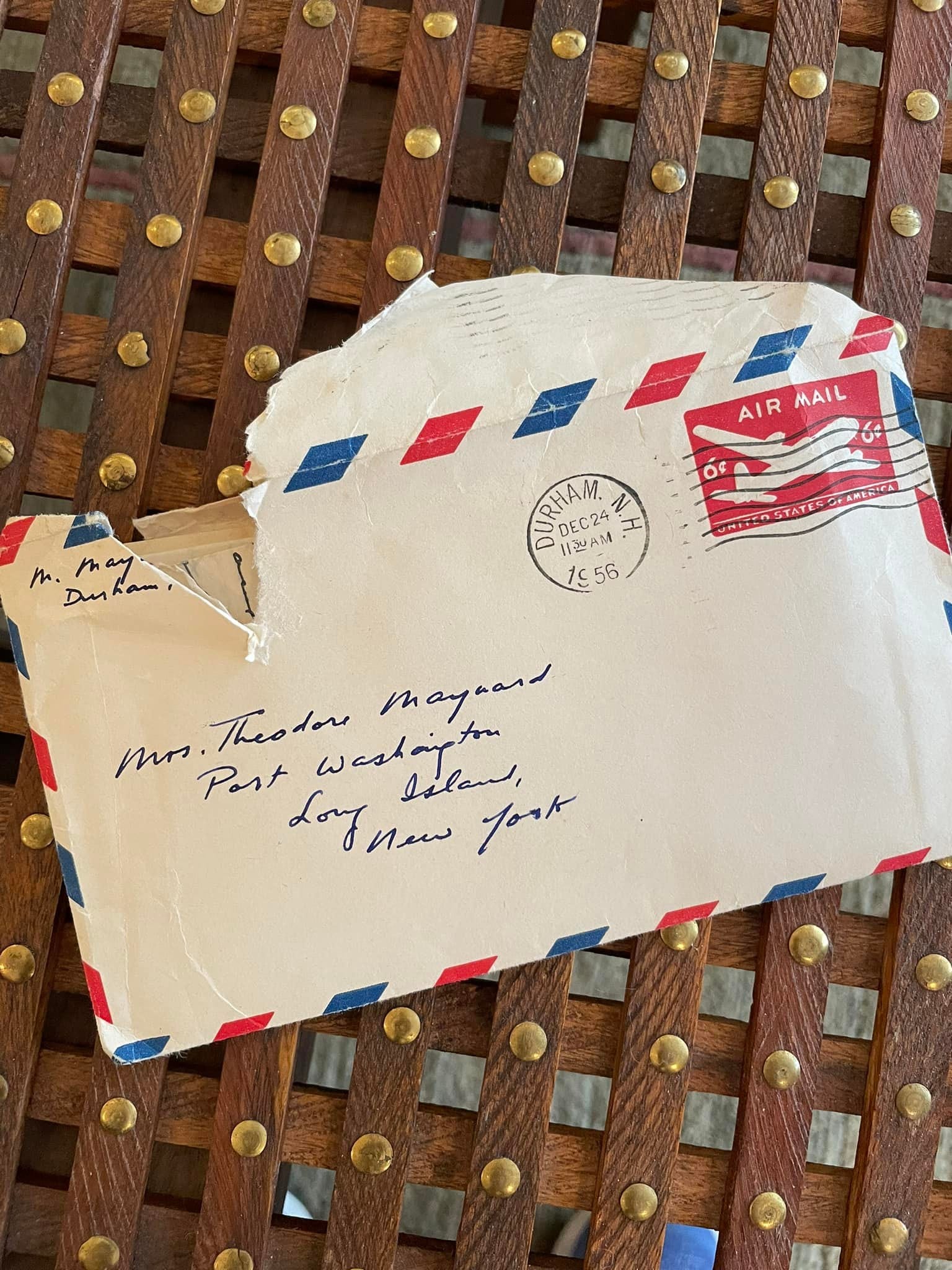
My father’s letters were a private matter—composed at night, in his cups, behind the closed door of the dusty lair he called a study. None of us knew precisely what went on in that room the color of algae on a pond. We did know he wrote letters, especially to far-flung Maynards he hadn’t seen for years. Christmas loosened both his pen and the cap on the vodka bottle. Between Max and his fellow Maynards there was precious little comfort and joy. The letter in my hand, to his widowed sister-in-law, was postmarked Christmas Eve, 1956. I was seven, about to find a dollhouse under the tree.
My father didn’t know his sister-in-law’s address. “Port Washington, Long Island, New York,” he’d written. Yet the letter found its way to Kathleen Maynard, second wife of his brother Theodore, and then down two generations to his granddaughter Rosemary, my cousin once removed.
I read the letter on the spot, with a shiver. My father revered the older brother he had lost, never spoke his name without longing. But when Theodore died, two months passed before he wrote to Kathleen. She had ripped the envelope in haste, as if she couldn’t wait to be done with Max Maynard.
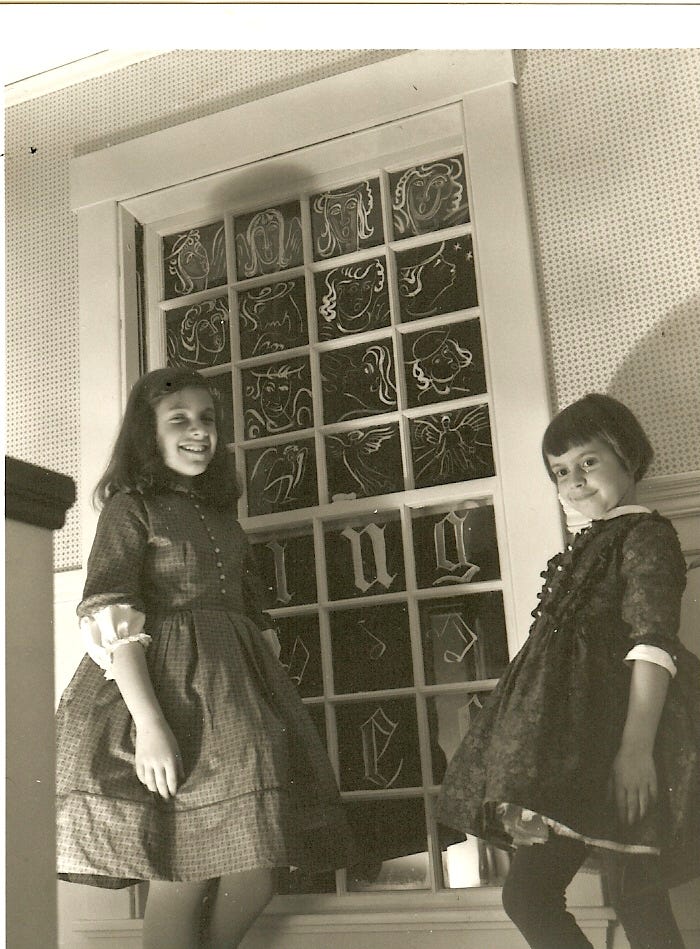
Other kids gathered with relatives at Christmas. Tables rang with laughter; foyers gleamed with melted snow from many boots. My sister and I were not so lucky. The manic abundance of our Christmas—batch upon batch of cookies, piles of barely affordable presents—was like a shiny bow on a box of regret and loneliness my father couldn’t lose. Christmas made him moan and rake his hair until it stood on end. I never knew why, only that his grief involved the Maynards.
Max was the second-youngest of seven surviving children born to Thomas Henry and Eliza Maynard, Plymouth Brethren missionaries. In a family photo taken circa 1905, he’s a winsome toddler. Theodore, 13 years his senior, wears the complacent half-smile of an oldest child lording it over the youngsters.
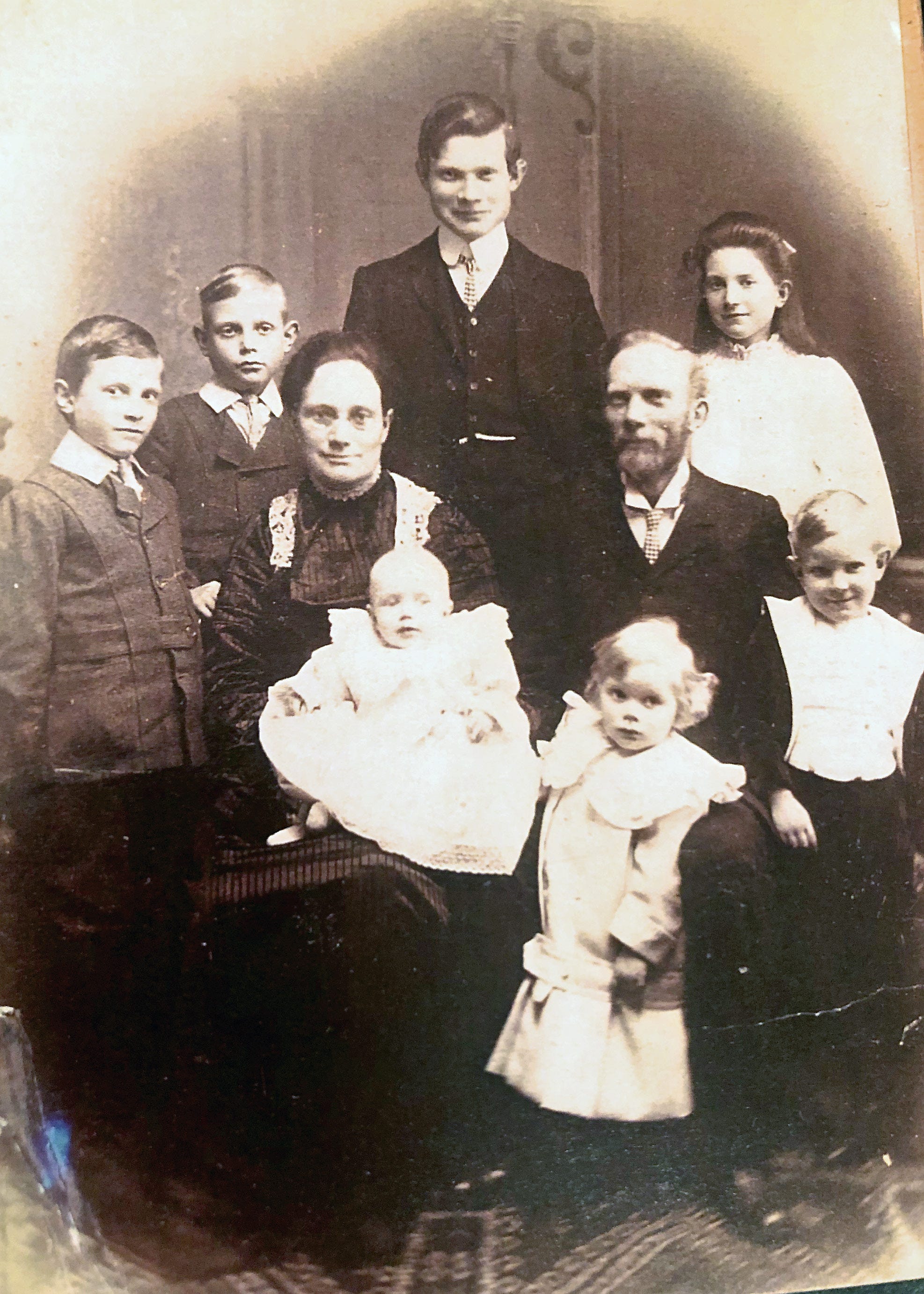
My Maynard grandparents devoted their lives to one purpose: preparations for the Second Coming. On Sunday they forbade all toys and all books except the Bible. For the sin of painting on the Sabbath, my father lost his paintbox for a year. He turned his back on the Brethren at the first opportunity to cast his lot with artists and writers. Theodore had already broken with the faith, in the worst way Thomas and Eliza could imagine. They detested Catholics, who in their eyes had sold out Christ to the Pope and his army of gilded minions. Theodore had the gall (or the moral courage, as Max must have seen it) to desert their cause and join the enemy. Said Eliza, “I’d rather see you dead.”
Southern India, where Thomas and Eliza ran a mission, was the first home my father knew. He admitted to having seen a tiger, but the only big cat he cared to discuss was William Blake’s. I have Theodore to thank for my only glimpse of a tiger among the Maynards. He described the scene in a book, The World I Saw, that makes me wish I’d known him. “Even when I was tucked between the sheets I could hear [tigers] prowling outside the window. One night when I was about five I was awakened by a tiger licking my hand…. My screams brought the family rushing in, and everybody assured me that I was quite mistaken; no tiger could possibly be there. I knew better; I had seen the tiger.”
I pulled the letter to Kathleen from its six-cent airmail envelope. Three sheets, folded in thirds, their edges perfectly aligned. My father would have knocked back a few to write these words, yet he formed his letters like an artist. I braced myself as I did in childhood—as we all did, never speaking the word “drunk” or “alcoholic.” How badly did Max Maynard blow it with Theodore’s widow?
The letter reads like a lesson in how not write condolences: Forget the person who is grieving; make this all about yourself. So sorry he missed the funeral, but our family had to move; the buyer of our old house would give us no quarter. “Please don’t think it was callous indifference that kept me here. Of all my family Theo was the one I most admired…and most loved.”
My father cranks up the self-pity, recalling an ill-starred visit from Theo and Kathleen. “An utter failure. And it was all my fault…. I now remember (and with deep sadness) how warm and friendly you both were and how negative, cold, stumbling and apathetic I was.”
Code for “drunk.”
He begs Kathleen to forgive him. “Can you understand, Kathleen, that the legend of Theo made it difficult for me?”
I imagine myself in Kathleen’s position. Max has just beseeched her to get inside his guilt-ridden head. He urges her, freshly widowed, to share his desolation at Christmas (“carols over the radio, carols in the shops”).
I grew up raging at my father’s violation of every social norm. Negative, cold, stumbling, apathetic. Hell, yes. What I’d missed was the depth of his shame, his terror at being judged. His parents had warned him to prepare for the last trumpet, when the saved would rise up to sit at God’s right hand while the damned would burn forever. He thought he’d rejected all that, but still dreaded the judgment of those he’d offended. He tells Kathleen, of that disastrous visit to New Hampshire, “I suppose you went away thinking I had been deliberately repelling.”
Repelling. A cudgel of a word to turn against oneself.
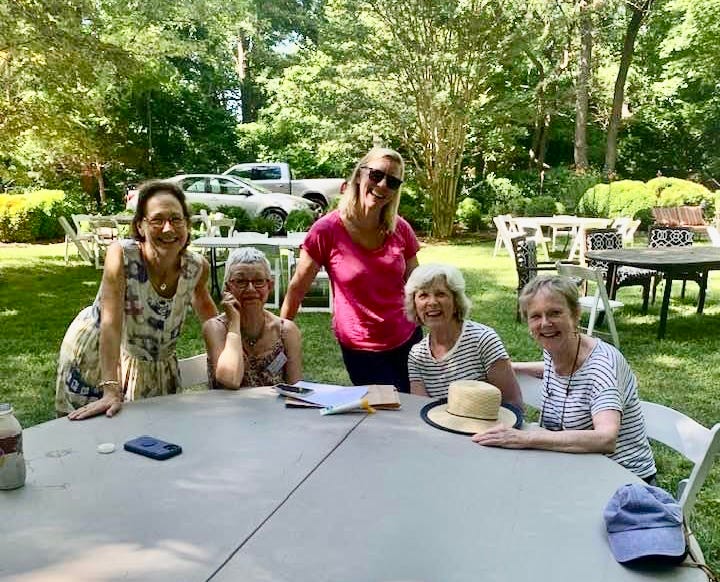
At the Maynard reunion, late afternoon sunlight streamed through the dining room window. Outside I heard action at the barbecue. A few minutes had passed, yet it seemed like 66 years. Rosemary was still beside me.
Had Max and Theodore found a way to be brothers, I might know Rosemary from a childhood road trip. My family drove nowhere if we couldn’t be home by teatime, but maybe hers had a sense of adventure. We could have frolicked in a sprinkler together and sent each other letters with tiny hearts in the margins. Yet here we were, a few dozen Maynards gathered for a long weekend’s merriment on Chesapeake Bay. A country band was about to set up. Grownups would dance while kids blew bubbles.
This crew had known one another for years; I was the newbie, the only one named Maynard, yet it seemed I had known them all my life. Maynard, I discovered, is more than a name. It’s pride in the twisted paths our family has traveled to a wide green lawn in Hollywood, Maryland where wildflowers grace every table and and the oldest member of the clan, in his 90s, has just caught the biggest fish of the day. I couldn’t imagine more fun on the Fourth of July—although, in my heart, it was the Christmas I always wanted.
Has a falling-out scarred your family? Have you found a way to make it right? This is the place to share your experience. Don’t be shy—we’re a big-hearted group. And I’ll do my best to answer every comment.
If this essay touched you, check out “There for You,” a reader favorite from last year. Browse away; all my posts are free to read. A tiny percentage of my readers have chosen a paid subscription just because they value my work. If now’s the time for you to join them, I will feel like dancing. You didn’t have to but you did. How lovely is that?
Are you ready to get serious about a personal essay of your own? I offer one-on-one coaching for writers at all levels with a discount for paying subscribers. I coach the way I write—from the heart, to the point. Let’s book a free 20-minute consultation to see if we’re a fit. Details here.
A lovely memory of family rediscovered. I love the picture. There's one thing that struck me: I look at that window your father painted, and I see a man trying so very hard, against all private sorrow, to give something of himself to his family at Christmas. Given what you've written about him, that window is especially moving.
How many of us are called on to reinterpret our parents (and our childhoods) with knowledge of their own lives that gradually comes to light? Like you, I had a troubled father given to drink and rages, but understanding the root of his anguish makes forgiveness easier.