

This pool is not for you
One child on the field trip could not swim because of her race. The teacher never forgave himself.

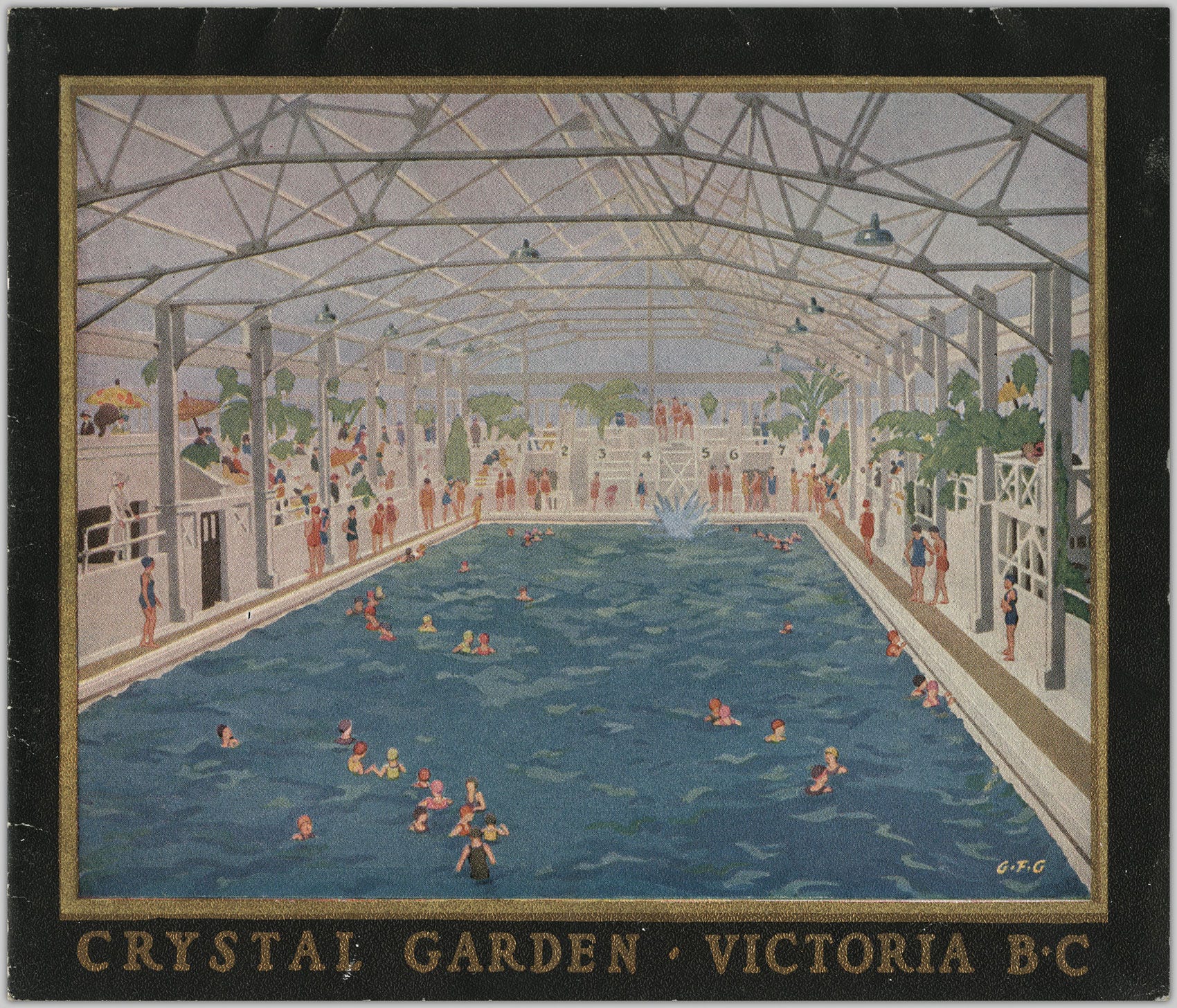
When my father was a young schoolteacher in Esquimalt, B.C., he took his class to the legendary salt-water swimming pool at Crystal Garden in Victoria. The pool was Victoria’s pride, largest of its kind in the entire British Empire. Sunlight shone through a glass-paneled roof; a promenade overlooked the water.
As the kids filed out of the change room, gawking at the wonder of it all, a firm adult hand pulled one child aside—Toshie Takata. The smallest child, my father recalled, beloved and protected by her classmates. Everyone respected the Takatas, who ran a Japanese teahouse in Esquimalt. But it was one thing for them to wait on white customers, and quite another for Toshie to join white swimmers in the pool.
The gatekeeper shook his head. No Japanese allowed.
I used to press my father for stories of childhood scrapes. The only child he cared to reminisce about was Toshie, that day at Crystal Garden. “Tell about The Little Japanese Girl, I would say, already shivering with sympathy. Toshie reminded me of other small, ill-used heroines—the match girl who froze to death on the street, the mermaid who gave up her fish’s tail for love of a prince who didn’t even notice her existence. The girl who haunted my father was not Japanese but Canadian, born in B.C. like all the other kids in grade five. Yet because of her race, she had to sit on the sidelines while her classmates frolicked in the pool.
I must have been a fifth-grader myself when my pity for Toshie turned to indignation. In faraway Louisiana, a Black child named Ruby Bridges had been taunted and threatened for daring to enter an all-white school. Federal marshals escorted Ruby past a phalanx of hate; no one stood up for Toshie. My father had a chance and failed her. “You should have taken all the kids out,” I said. “Everyone swims or nobody does. Fair’s fair.”
I didn’t like my father’s answer, whatever it was. He saw me judge him, believed he deserved no less. Shame flickered in his eyes. Fair’s fair.

Long after his death, a classmate of Toshie’s tracked me down. She invited me to tea with Toshie’s older brother Toyo. Then in his mid-70s, he filled my porcelain cup with strong brew fit for Miss Marple. I skipped the biscuits, pale and English. Grievance was not on the menu. Two old school friends simply meant to share their memories of the dashing Mr. Maynard, the only teacher who bounded out of Lampson Street School with a sketchbook under his arm. Sometimes he hopped into a waiting sedan with a fierce middle-aged woman at the wheel. Imagine, a woman who drove! Emily Carr, a future titan of Canadian art, had come to take Mr. Maynard sketching.
More than 30 years had passed since my father took the kids to Crystal Garden. Toshie’s brother had to know I used to grieve for his sister. He did not speak of anger or injustice, only of his pain for her. “She sat in the bleachers with tears streaming down her face.”
No Japanese allowed. The gatekeeper likely used another word, common parlance in 1934. A phonics lesson of the day, published in a textbook for a whole generation of Canadian children, includes the series “nap, rap, gap, Jap.”
Toshie must have heard that word everywhere but home. She and Toyo breathed the toxic air of prejudice. And yet until that day at Crystal Garden, she thought that she belonged. Everyone liked her. Wasn’t that enough? Only if you happened to be white.
My mother’s parents, Jewish immigrants from what is now Ukraine, struggled all their working lives to belong in one hard-luck prairie town after another. Grandma baked her famous tortes for the Ladies Aid; Grandpa joined the Masons (neighbors called him “a real white man”). Meanwhile they tried to turn a profit from the latest incarnation of The O-Kay Store, which never stayed okay for long. Launched in a flurry of crepe paper streamers and easy credit, each one foundered when Gentile competition came to town.
They’d no sooner arrived in Birch Hills, Saskatchewan than a bully said of my dark-skinned, curly-haired mother, “Is that a—?” Then he spoke an ugly word no one had ever called her. Retorted his pal, “Naw. It’s a Jew.” That. It. Grandpa used to tell his daughters, “A Jew is a wanderer, and he learns to carry with him what matters. But what you are, in the heart and the head, no one takes from you.”
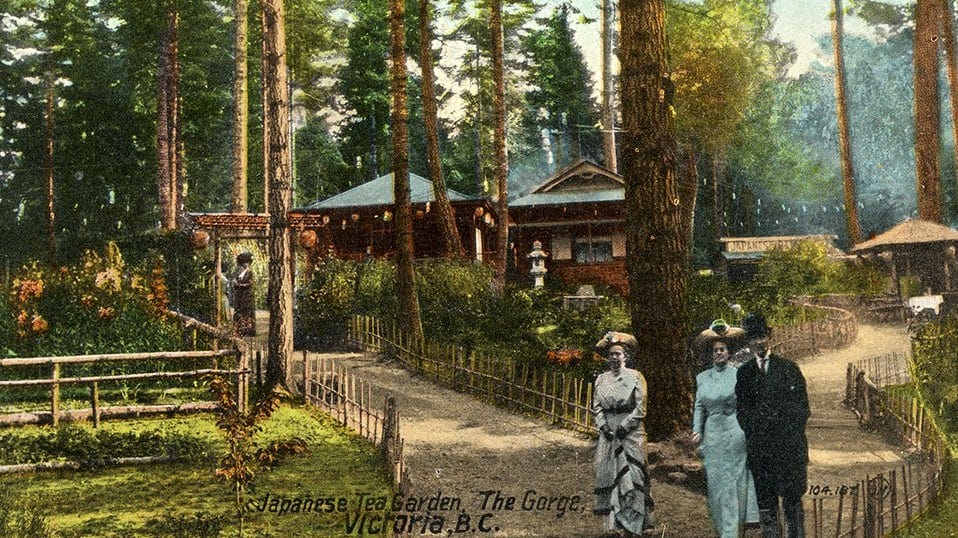
When my father taught the Takata children, they never guessed how far they would wander or what they would lose on the way. The family teahouse, nestled in Japanese gardens, welcomed guests from around the world. An outing there would make a child’s day. Azaleas and rhododendron perfumed the air. Goldfish darted between lily pads, inviting you to pause on the footbridge and count them. Windchimes tinkled from pagodas. You made your way through an enchanted land where beauty ruled and Mount Fujiyama beckoned from the side of a china teapot. Yet the fare on the menu could not have been more English—sultana cake, poached eggs on toast. No noodles here. The Takatas meant to belong.
After Pearl Harbor, suspicion fell on Japanese Canadians. They had to give up their cars and radios. Then they were driven from their homes and interned in remote work camps. Before bulldozers came for the teahouse and gardens, looters ransacked the property. They uprooted plants, tore wiring from the walls. Someone made off with the silver tea service—maybe someone Toyo had served as the lanterns glowed on a summer evening.
It was April, 1942, the month Dutch Jews were first required to wear the yellow Star of David. Among them was 12-year-old Anne Frank. She would write in her diary, a talisman of my teens, “In spite of everything I still believe that people are really good at heart.”
My mother made sure I understood why her parents fled the Old Country. They never told me about the pogroms, but Isaac Babel described one in “The Story of My Dovecote,” a favorite of my mother’s. The child narrator, a nine-year-old Jewish stand-in for the author, watches in baffled horror as villagers make off with the spoils of Jewish businesses they might have patronized yesterday:
“[A] woman with a beautiful, fiery face went running down the alley. She was holding a bunch of fezzes in one hand and a bolt of cloth in the other. In a happy, desperate voice, she was calling out to her children…. A silk dress and a blue jacket trailed after her scuttling body….”
An old man is murdered and the narrator’s pet doves crushed with one blow of a marauder’s hand. This child been following the rules of his time and place: Ace your exams, and you’ll beat the lycée’s quota on Jewish students. Plus, your father will pay for the doves you’ve always wanted. Now the boy lies facedown in their blood. “[T]ender entrails slithered over my forehead, and I closed my uncaked eye so that I would not see the world unravel before me.”
There were no killings at the teahouse, but the Takatas’ world had been smashed. After the war, Toyo and Toshie left B.C. for Toronto. Toshie had hoped to send for her piano, left in the care of a friend, but could not afford the shipping costs. Toyo became a leader among Japanese Canadians, chronicling their history and advocating for justice. The silver tea service was returned to him, the mutilated garden restored. In 1988 the federal government issued both an apology to Japanese Canadians and payments of $21,000 to each survivor of internment. Toyo responded with grace and dignity. He welcomed the gestures but reminded Canadians that no sum on earth “will ever compensate for what happened to us.”
On my last trip to Victoria, four years ago this summer, I finally moseyed over to Crystal Garden. The pool closed in the 60s, but I wanted to stand inside the place where two lives changed on a school field trip. Under the glass roof, I would picture the scene: Toshie reckoning with her otherness, my father with his lack of moral courage.
I got as far as the entrance, behind a bus destined for the airport. Chattering tourists, all seemingly under 25, poured out of an exhibition on comics. Lives change everywhere and leave no mark on the scene.
Maybe I was too hard on my father. How many, in his time and place, would have told the gatekeeper at the pool, “Everyone swims or no one does?” Damn few, I’ll bet. I’m not sure I could have done it myself. But Max Maynard set great store by his ideals, the one bond he shared with his missionary parents. When he turned his back on their faith, he held onto the shards of it: loving your neighbor, protecting the vulnerable. One school day at Crystal Garden, he loosened his grip. He never forgave himself.
Max Maynard and Toshie Takata sit forever side by side in Victoria’s history. I found Toshie’s version of the story in Gateway to Promise: Canada’s First Japanese Community. As she told authors Ann-Lee and Gordon Switzer, Max Maynard never raised the incident in class. Her uncle wanted to lodge a complaint, but her father, playing by the rules, thought silence would protect his daughter’s name.
Some stories take years to bloom. The one I’m sharing here is that kind—planted by my father, staked by Toyo Takata, watered by the Switzers’ book. It turns out that Toshie had one champion at Crystal Garden—her friend Betty Witmer. If Toshie couldn’t swim, neither would Betty. My father, a preacher’s son, knew his King James Bible. If I could speak to him now, I’d read him this verse from Isaiah:
The wolf also shall dwell with the lamb, and the leopard shall lie down with the kid; and the calf and the young lion and the fatling together; and a little child shall lead them.
I didn’t think it mattered where Toshie’s father, Kensuke, used to live before seeking his fortune in Canada. But the Switzers told me, and the name of that place tolls a bell. When Kensuke Takata left Japan, he said goodbye to Hiroshima.
Have you ever had to make a choice between silence and moral courage? Or played by the rules in order to fit in, only to find the rules did not apply to you? Let’s talk, friends. You’ve touched me week after week with your honesty and your generosity toward one another. I can’t wait to see what’s on your mind this time.
Like my father at Crystal Garden, I’ve been known to keep quiet when I should have spoken up. Then I saw a Muslim woman being harassed by a skinhead. Here’s what happened when I gathered my courage.
All my posts at Amazement Seeker are free to read and share. No one has to pay to join the conversation. If you feel moved to pay and have the means, it’s for the best possible reason: You want to lift my wings for a month, a few months or a year. I can’t thank you enough.
If you’ve lived a story you’re burning to tell, I might be just the coach you need to get started. Let’s book a free consultation to see if we’re a fit. Details here (note the discount for paying subscribers).
Well, this one's a beauty. And such a fraught and timely subject. I had no idea that Canada was as awful toward the Japanese (before Pearl Harbor) as the United States was. So much arrogance, ignorance. I do think it's beautiful that you got to visit with her brother. I feel for your father, that he got cornered and had to confront his willingness to object and chose to say nothing. It's hard to speak up sometimes. We all know that. But gosh it's tiring to witness our human failings over and over again. Humans are supposed to evolve, to learn, to become better selves. I remember the pogrom stories my grandmother told, what she witnessed as a young child. But then, I watched her treat others the way she was treated. She was racist, for sure. She thought she was blending in, but that's far from the truth. I questioned her over and over, saying "why are you doing what others did to you?" She's this is different, they're animals. I never loved her the way I loved my other grandmother, who treated everyone equally. Everyone.
I was in third grade the first time someone called me a kike. A boy from my class. I didn't know yet what the word meant, but I knew it was bad, by his tone and the sneer of disgust on his face.
Why do we do this to one another? What a waste. I expect better from my fellow humans. Much better.
PS. You'll be receiving a package some time in the next few days. There won't be a card in it. It's from me, with the unexpected help of a writer friend on Substack. I fill you in once you get it. xo
Sometimes it's children who do the right thing, and they do it instinctively. I wonder what became of Betty Witmer?