

Say their names
After grief for a loved one comes the sweet consoling music of joy in what you shared

A happy person, they say in Bhutan, contemplates death five times daily. There’s an app, WeCroak, to remind you, with a winsome frog to get you in the mood. Thanks, but I’ll pass. I’ve got a tribe of frogs at the bottom of the pond, yet in memory they are still green and leaping. Death comes to mind so often, I must be on the path to nirvana.
My friend Val Ross drinks to our two October birthdays; the restaurant glitters like the discos of its era. Anne Fager saunters barefoot with me through Harvard Square, the two of us united in disdain for anything so conventional as shoes. My father, Max Maynard, steps back from his easel and asks my opinion on the painting taking shape there, as if I’m a peer instead of a seventh-grader. Their deaths undid me. I staggered in the fog of disbelief, erupted in sobs or took to bed with chills, fever and a weeping nose. Now I say their names in celebration.
Fredelle Maynard. Keitha McLean. Bruce Carroll. James Wark. Joyce Kornblatt. Time blessed us and theirs ran out.
Don’t tell me my dear ones “passed,” as if they moved up a grade. Or “transitioned;” no one I’ve lost had a sex-change operation. Casey Charles Jones—thief of balls, sworn enemy of squirrels, connoisseur of sidewalk-aged pizza—did not “cross the Rainbow Bridge.” Like the humans I’ll always miss, Casey died. His ashes sit in a midnight-blue bag beside the door where he used to jump for the leash. Yet saying his name makes me smile. I often remind my husband, as our current dog tongues the rim of an empty yogurt container while leaving ribbons of creamy goodness at the bottom, “Casey would lick it so clean, you’d think it had been scrubbed.”

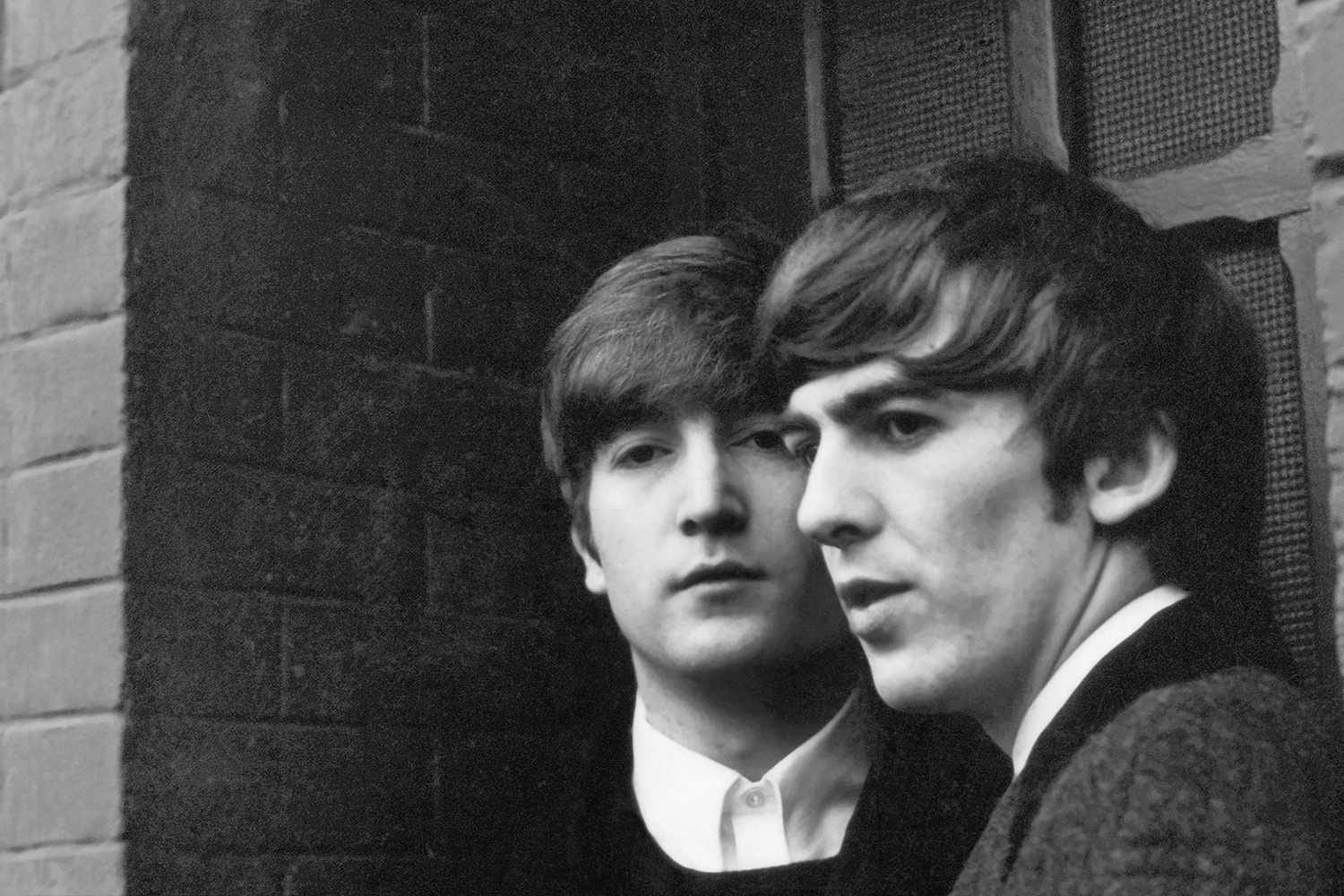
John Lennon and George Harrison were long gone when Paul McCartney revisited his photos of the Beatles’ rise to fame. They pitched him back into the madcap frenzy of a six-city tour—photographers and fans on the chase, screams of rapture filling packed halls, the Arch of Triumph glimpsed from a limo by newbie globe-trotters whose parents had no money for travel.
Last week at the Art Gallery of Ontario, where an exhibition culled from the trove has entered its final days, I saw Beatlemania through McCartney’s eyes—as he saw it then and as he looks back in his 80s, sharing his Beatles family album with the world. What strikes him today is not sadness for the missing but joy in what they shared. He says in the show’s companion book, “I have to say ‘Wow’—we did all that, and we were just kids from Liverpool. And here it is in the photographs. Boy, how great does John look? How handsome is George, and how cool is Ringo, wearing that funny French hat?”
When most people die, their names reverberate for a while. The obit, the eulogies, the murmured conversations between stricken friends. Val’s employer didn’t rush to erase her voicemail greeting. For a few days after her death, maybe even a week, I could call her at the newsroom just to hear her lilting voice. Eighteen years later her old colleagues have retired or died themselves. I ask writers of a certain age, “Did you know Val Ross?”
My grandfather used to say, quoting the Yiddish writer Sholem Aleichem, “If there are no blintzes, let us at least talk about them.” I’m hungry for a fresh Val story. I want to share my own favorite, in which Val, a 20-something recycler, submits a manuscript to me on oddments of paper stitched together with multicolored yarn.
When Val was still schlepping her tote bag full of books, notes to self and party shoes, everyone in Canadian publishing knew her. Today they know of her, at best. The blue and green yarn on her copy might as well be a novelist’s flight of fancy. Deprived of conversation about my friend, I slip her into my real-life tales. I’m not done saying her name.
For love of her and many more, not all of them human, I say the names of other people’s dead. “Sorry for your loss” rains down every day on Facebook, a deluge of reflexive sympathy. I’ve been known to join in. Not so long ago, I needed a card and an address for a hand-written note of condolence. Pen in hand, I chose my words with care, one the name of a spouse or friend or pet or sibling alive just yesterday. Now “care” is an icon resembling a stuffie and your loss the same as any other—unless I say the name of the missing one.
Mary Oliver wrote in “When Death Comes,”
…I think of each life as a flower, as common
as a field daisy, and as singular,
and each name a comfortable music in the mouth,
tending, as all music does, toward silence…
You’ll never bear your missing alone while there is someone else to sing the music. Decades ago in Calgary, Dr. David Hanley took a fact-checking call from the women’s magazine where I worked. The checker meant to confirm a quote on his specialty, osteoporosis; Dr. Hanley hoped she would relay a message. He’d noticed my name on the masthead and knew I’d been a friend of his sister’s.
Susan Hanley, last seen in our student days. I couldn’t wait to reconnect. As it happened, I missed my chance. Susan died young of ovarian cancer. I still wonder what she might have made of her life. But I got to tell David that her word play used to crack me up. Only Susan would describe a late-night search of our communal kitchen, where someone had hidden the peanut butter jar, as “skulking and lurking.”
She didn’t live to see a bone center named for the brother who amused and inspired her like nobody else. I looked him up online. He has her smile.
Jim Barringer. Faith Reimer. Jeremy Richard. Eb Hoene. Two Chrises, Sones and Conway. Eleanor and Frank Milliken. Celia Geltner. Arthur Gelgoot. My honor roll goes on and on. Who have I forgotten?
Last week I met a new friend for coffee. Patio season flies quickly in Toronto, and we’d found just the place to enjoy it. Our table looked out on the sidewalk parade, everyone baring arms, calves or décolletage to the sun. My friend, a writer about my age, never knew Val Ross but knows the ache for Mary Oliver’s “comfortable music in the mouth.” Two of her own friends have recently died, one a longtime sister of the heart, mind and pen. I’d never heard of Alice Shalvi. Now I write her name with reverence.
Hugging doesn’t come naturally to me, but I hugged my new friend Nora Gold. Her name turns my mind to possibility and presence, like a green shoot to the sunlight. I wonder who we’ll become to each other.
Your turn, friends. Let’s make some comfortable music with the names of loved ones we’ve lost. Who would you like to celebrate? Say their name. I’m listening.
Writing is the best way I’ve found to celebrate those I’ve lost. After we came home with Casey’s empty collar, I sat down to write his obituary. After Val died, I wrote the first of many stories about our friendship. My words awakened bright memories that lit my way through mourning. I’ll tell you more in “Writing to Raise the Dead.”
If you’ve lived a story you’re burning to tell, I might be just the coach you need to get started. Let’s book a free consultation to see if we’re a fit. Details here (note the discount for paying subscribers).
All my posts at Amazement Seeker are free to read and share. No one has to pay to join the conversation. If you feel moved to pay and have the means, it’s for the best possible reason: You want to lift my wings for a month, a few months or a year. I can’t thank you enough.
What a beautiful essay, Rona. You wandered here and there, sure of your direction. I don't use euphemisms for death. Everyone is so scared to call it what it is. And, ick, the Rainbow Bridge. It's make-believe. It diminishes memory of the ones we've lost to soft peddle the truth.
The thought of Paul McCartney being in his eighties blows my mind, but of course he is. How can life feel so long in one breath, and then in the next, as if it's flashed by us as we barely kept up. He can't be in his eighties. I'm still a nine-year-old bopping to their music. And Rona, this line, "Death comes to mind so often, I must be on the path to nirvana." I could hear you saying that. I laughed out loud. Thanks for this. Chef's kiss! xo
Beautiful, Rona. Grandparents’ and parents’ deaths, though very sad, are the cost of a long life. Even pets, who grace our lives for a short time only. When friends begin to die, that feels like a whole other country.